Casino Dealer Language: Every Term Explained
A casino table has its own rhythm. Chips click against the layout, cards slide across felt, and a dealer’s voice cuts cleanly through the background noise. For new players, casino dealer language can initially sound formal or even theatrical. Yet these familiar calls and movements are part of a practical system built around clarity. At roulette, a phrase such as “place your bets” marks the brief period in which wagers may be made or adjusted. At blackjack, a player’s short instruction, “hit” or “stand”, directs the next step of the hand. Alongside spoken words, dealers use visible gestures to show that cards, chips and equipment have been handled openly. Understanding this vocabulary changes the experience of watching a table. You can follow the action with more confidence, recognise when a decision is final, and appreciate why dealers rarely improvise their routine. The language is part etiquette, part procedure, and part casino culture, shaped by games that depend on every participant seeing what happens next.
The dealer is the person responsible for running the table according to the game’s rules. They accept and pay wagers, deal cards or spin the roulette wheel, announce key moments, and keep the round moving at a measured pace. Their role is not to advise players on what to bet or to influence a result. Instead, they are the visible point of control between the game, its procedures and the people around the table. This is why casino terms explained at a table tend to be short, repeated and exact. A busy roulette table can involve several players making different wagers at the same time. There is little room for ambiguous wording. The dealer needs everyone to understand when betting is open, when it has closed, and when the winning number has been determined. A consistent phrase gives every player the same information at the same moment. “Place your bets” is the classic roulette invitation. It means the betting period is open: players may put chips on the layout, add to a previous wager, or move chips before the dealer closes the round. The call is not a promise that there will be time for a long decision. Roulette moves quickly, particularly at a lively table, so players are expected to have a reasonable idea of their wager before acting. The next phrase, “no more bets”, has a much firmer meaning. It signals that the betting period has ended. From that point, chips should not be placed, removed or repositioned. The dealer may make this announcement as the ball is moving around the wheel, following the table’s established procedure. Once the call has been made, the layout is effectively frozen until the outcome is settled. After the ball lands, the dealer identifies the winning number and uses a marker known as a dolly to indicate it on the roulette layout. The dolly is placed directly on the winning number or corresponding position, creating a clear visual reference while losing chips are collected and winning wagers are paid. This matters because roulette bets can overlap across sections of the layout. The marker helps the dealer and players track exactly which bets remain valid. The phrase pair “place your bets, no more bets” is therefore more than tradition. It defines the beginning and end of a wager. In a regulated Belgian setting, procedures such as these also support orderly play and a traceable table process, under the broader oversight framework of the Belgian Gaming Commission.
⚡ Key Takeaways
- Casino dealer language gives every player clear information about the current stage of a game.
- At roulette, “place your bets” opens betting, while “no more bets” closes it.
- The roulette dolly marks the winning number while losing wagers are collected and winning bets are paid.
- In blackjack, “hit” requests another card, “stand” ends the player’s card draw, and blackjack means a two-card total of 21.
- Visible dealer gestures make decisions, card handling and chip movements easier to follow.
- Standardised routines support fairness, transparency and the prevention of disputes or cheating.
Roulette blackjack vocabulary differs because the games ask players to make different choices. Roulette players decide where to place chips before a spin. Blackjack players make decisions during a hand, based on their cards, the dealer’s visible card and the rules used at the table. The language is direct because the dealer needs an unmistakable answer before dealing the next card. “Hit” means the player wants another card. A player may say the word, make a clear hand gesture, or do both, depending on the setting and table procedure. In many land-based games, tapping the felt behind the cards is the usual signal for a hit. The dealer then gives the player one additional card. That decision can be repeated until the player chooses to stop, exceeds 21, or reaches a point where the table rules require the hand to stand. “Stand” means the player declines further cards and keeps their current total. The standard gesture is usually a flat hand waved horizontally above the cards. It is intentionally different from the tapping motion for a hit. A dealer should be able to see the decision easily, even if the room is noisy or the player is not speaking loudly. A “blackjack” is a two-card hand totalling 21, normally made up of an ace and a card valued at ten. It is not simply any hand that reaches 21 after several cards. This distinction matters because a natural blackjack is commonly handled differently from a later total of 21, subject to the table rules. The dealer will usually announce blackjack clearly and pause the action as needed to resolve the relevant hands. Other common terms include “bust”, meaning a hand has gone over 21 and cannot continue, and “double down”, where a player doubles their original wager under the game’s rules and receives one further card. “Split” applies when a player’s first two cards have the same value and may be separated into two hands, where permitted. These calls are functional, not decorative. They record a player’s decision in a way the dealer, surveillance staff and nearby players can all follow. Players do not need to perform perfect table etiquette to enjoy a game, but clear words and gestures help. If unsure, it is better to ask the dealer how a particular action is signalled before the hand begins than to make a rushed movement during play.
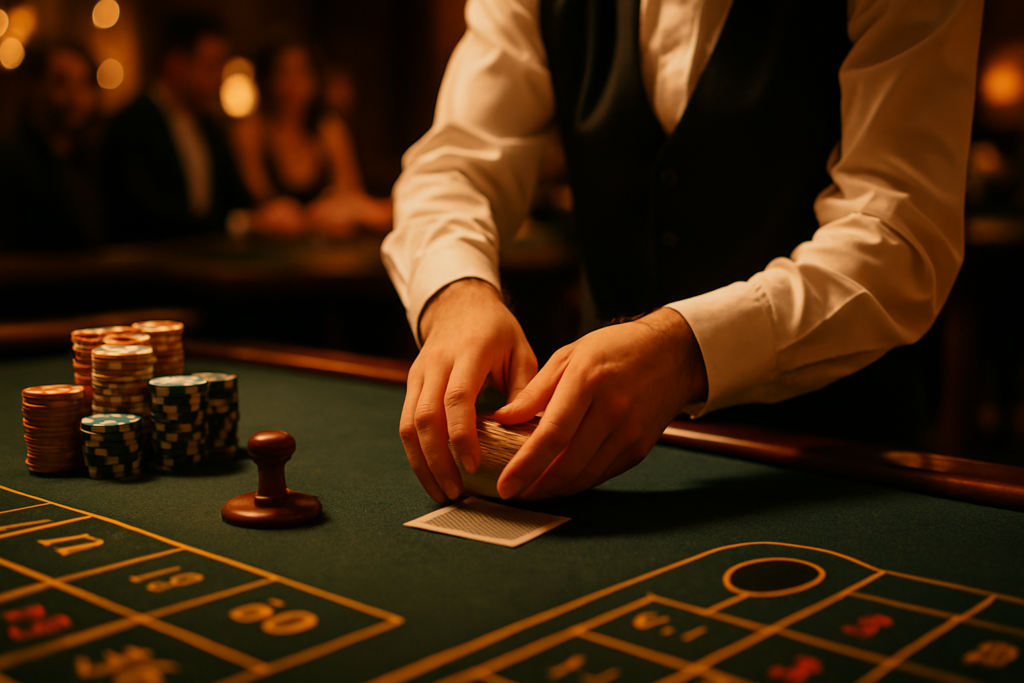
Dealer gestures casino regulars recognise are part of the table’s visual grammar. Spoken calls can be missed amid conversation, music or the sound of chips. A clear movement remains visible. It can also show that the dealer has not concealed, switched or altered an item while handling it. For games involving money and chance, that visibility is central to trust. Card handling provides an obvious example. Before blackjack begins, the dealer may shuffle the cards manually or use an approved shuffling device, depending on the venue and game format. During manual shuffling, the cards remain on the table and within view. The dealer squares the deck, cuts it in accordance with the procedure, and deals in an established order. The exact routine can vary, but the aim stays the same: the deck should be mixed properly and its handling should be observable. At a blackjack table, dealers commonly keep cards and chips in defined areas of the felt. They use open, deliberate movements when dealing, collecting losing wagers or paying winning ones. If a hand is completed, the dealer gathers cards in a consistent sequence rather than reaching across the layout unpredictably. These habits make it easier to identify what belongs to each player and reduce the risk of disputes over a wager or card. Roulette uses its own set of recognisable signals. The dealer’s hand movements around the layout accompany the collection and payment of chips. Dolly placement is especially significant. After the number is known, the dealer puts the marker on the winning position before clearing losing bets. Players can then see the result that governs the settlement process. The marker stays in place while payouts are calculated and completed, then is removed before the next betting period begins. These conventions also discourage cheating. A late chip placed after “no more bets”, a chip removed from a losing wager, or an unclear attempt to change a blackjack decision can be identified more easily when each stage follows a visible order. Surveillance systems may support casino security, but the first layer of transparency is often right on the felt. There is also a cultural side to this precision. Dealers develop a composed, economical style, even during a crowded round. The gestures are not intended to intimidate players. They are a shared code that keeps a game readable. Once you know what to watch for, the table feels less mysterious and more like a carefully managed live performance.
✅ Conclusion
Casino dealer language is a practical code built over generations of table gaming. Calls such as “place your bets”, “no more bets”, “hit” and “stand” tell players exactly where they are in the game. The gestures matter just as much. A visible shuffle, an open hand movement and the careful placement of a roulette dolly make the process easier to observe. For players in Belgium, understanding these routines can make a land-based table feel more approachable without changing the fact that gambling involves financial risk. Watch a few rounds before joining if the pace seems unfamiliar. You will soon see that casino dealer language is less about ceremony than structure. It gives the table a shared rhythm, protects clear decision-making and helps each round proceed fairly for everyone involved. Want to go deeper? Read our full how to play blackjack guide. Browse our independent Belgian casino reviews to find a trusted, licensed place to play. Casino Brussel only lists Belgian online casinos licensed by the Belgian Gaming Commission, the country’s official gambling regulator.
Ready to Play at a Licensed Casino?
Discover our BGC-licensed Belgian casinos — safe, regulated and trusted.
See Casino Reviews ?